


Silica Sand Export from India: Samples, Testing, Packing & Shipment
A practical guide for international buyers covering technical requirements, sampling, laboratory verification, packaging, documentation and shipment planning when sourcing silica sand from India.
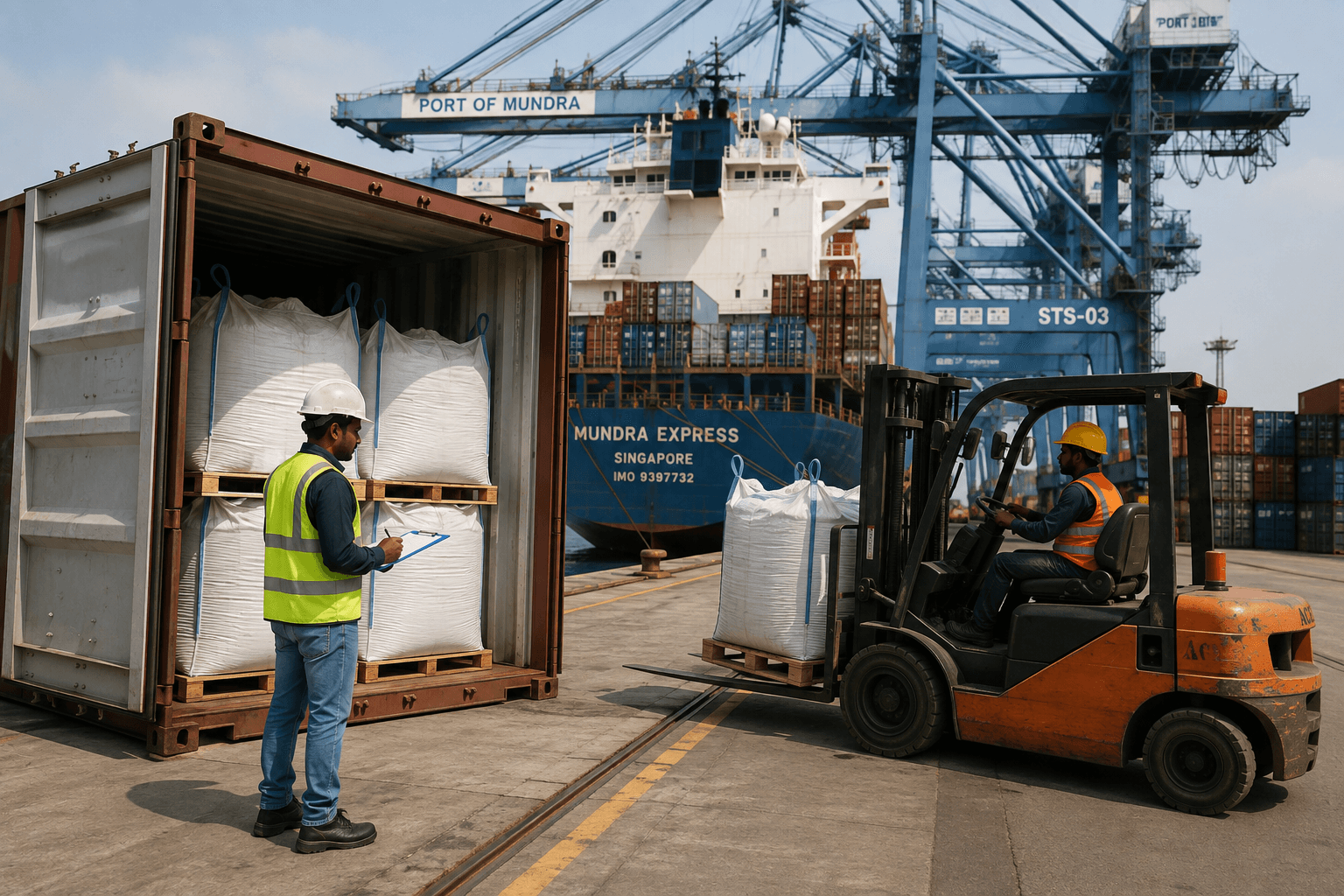
International silica-sand sourcing works best when technical qualification comes before commercial commitment. Buyers should define the application and specification, evaluate a representative sample, confirm packaging and documentation, and use a practical shipment process before moving toward regular supply.
1. Start With a Clear Technical Requirement
The first step is to provide the supplier with enough information to identify a suitable grade. A clear request helps avoid repeated quotations based on incomplete specifications.
Application
State whether the silica sand is intended for glass, foundry, filtration, construction or another industrial application.
Chemistry
Share required SiO₂, Fe₂O₃ and other chemical limits where applicable.
PSD / Mesh
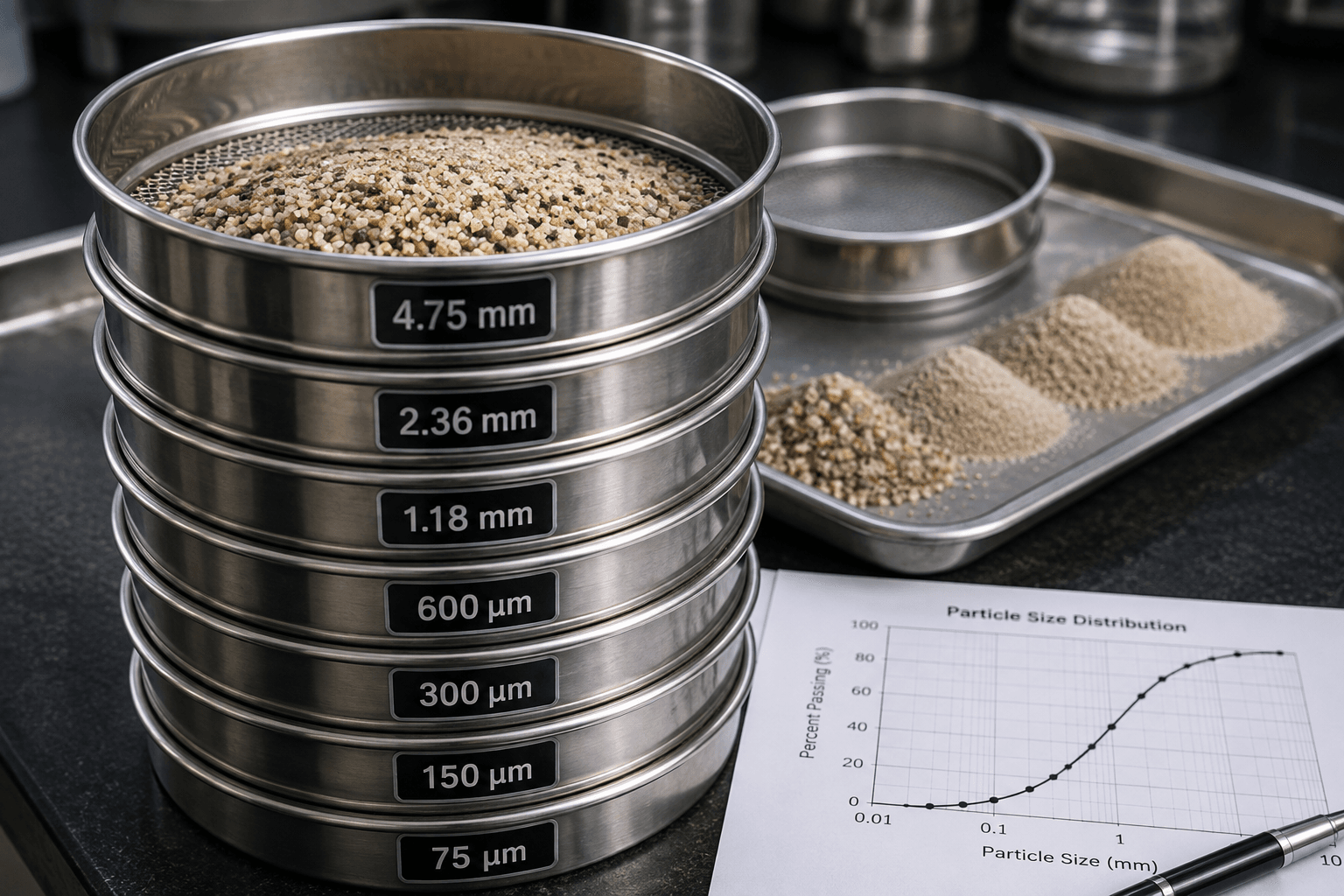
Provide the required mesh range or complete particle-size distribution rather than relying only on a generic grade name.
Commercial Requirement
Share quantity, packing, destination port and preferred Incoterm.
2. Request a Sample Before Bulk Supply
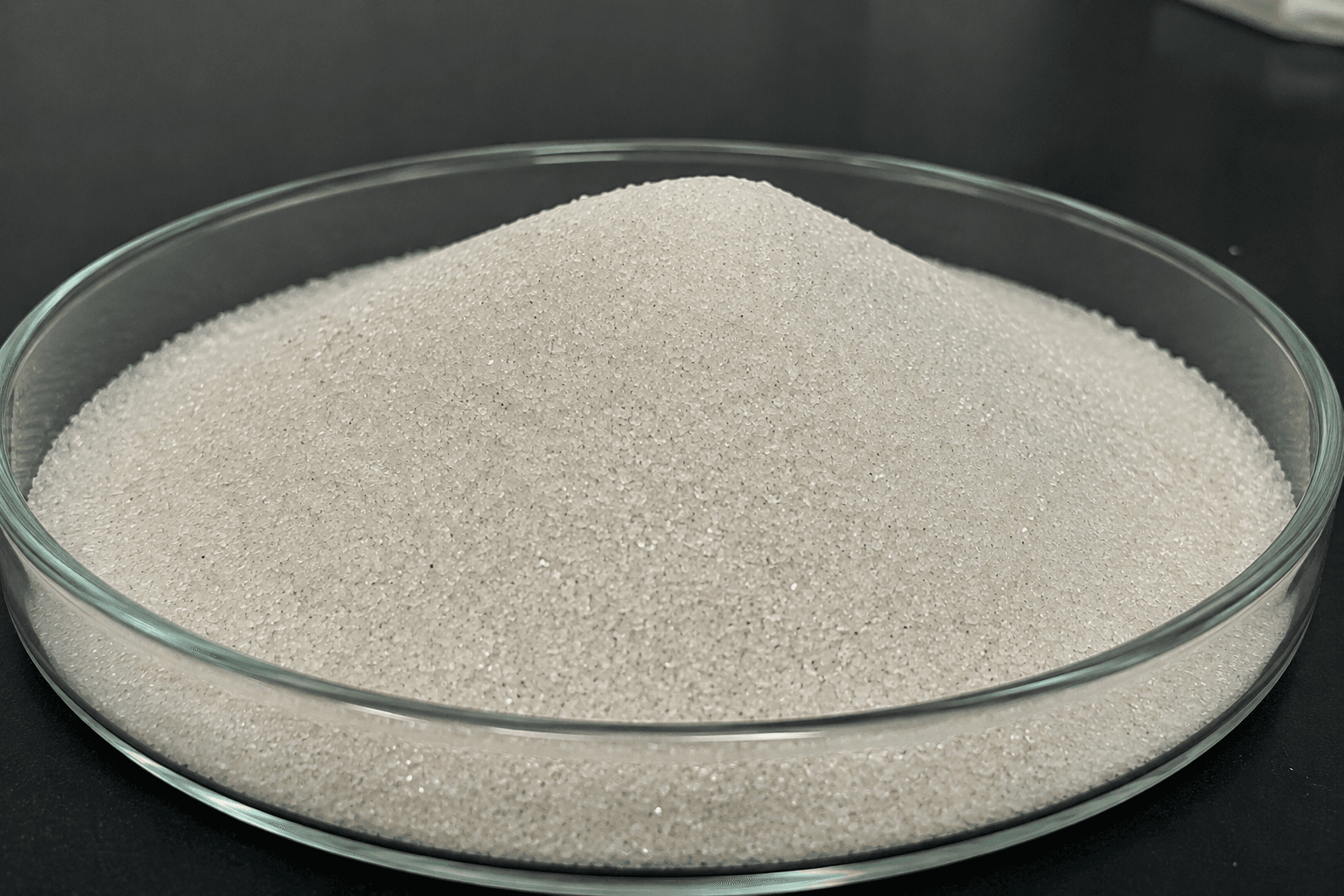
A representative sample allows the buyer to test the material against its own laboratory and application requirements before committing to larger quantities.
The sample should be linked clearly to the proposed commercial grade and specification so that the laboratory result can be compared with the actual shipment later.
Sample Evaluation Checklist
- Confirm the application and approved specification
- Test the relevant chemical parameters
- Check PSD / sieve analysis where required
- Evaluate colour, moisture and physical appearance
- Record the laboratory result for future comparison
- Confirm any technical differences with the supplier before ordering
3. Laboratory Verification
Supplier laboratory data is useful for technical screening, but buyers may also want to test the sample in their own laboratory. This creates an independent basis for approving the material for their production process.
The test parameters should match the buyer's actual purchasing specification. For glass, for example, SiO₂, Fe₂O₃, Al₂O₃ and particle-size distribution can be important; another application may require a different set of parameters.
4. Choose the Right Packaging
Packaging should be selected according to the product, quantity, handling method, storage conditions and destination requirements.
Jumbo Bags / FIBC
Useful for bulk industrial quantities and mechanical handling. Packing weight should be agreed before shipment.
50 kg Bags
Suitable where smaller handling units are required for warehouse, production or distribution purposes.
Container Loading
Loading configuration should account for packaging, container type, weight limits and safe handling.
Custom Requirements
Labels, packing material and special handling requirements should be confirmed before commercial production.
5. Export Documentation
International mineral shipments may require a combination of commercial, technical and transport documents. Requirements can vary according to destination and transaction terms.
| Document | Purpose | Buyer Action |
|---|---|---|
| Commercial Invoice | Commercial transaction and customs documentation. | Confirm product, quantity, value and agreed terms. |
| Packing List | Details packing configuration and shipment contents. | Check number of bags, weights and packing details. |
| Bill of Lading | Shipping document confirming carriage of the goods. | Review consignee, shipment and destination details. |
| Certificate of Origin | Confirms country of origin where required. | Confirm whether the destination requires it. |
| COA / Laboratory Analysis | Technical evidence for the product. | Compare against the approved technical specification. |
| SDS / MSDS | Safety and handling information where applicable. | Review for internal handling and compliance requirements. |
6. FOB, CFR/CNF or CIF?
The appropriate commercial term depends on the buyer's logistics preference, destination and ability to arrange international freight.
FOB
Useful when the buyer prefers to control the ocean freight after the goods are loaded according to the agreed FOB arrangement.
CFR / CNF
Allows the seller to arrange ocean freight to the agreed destination port while insurance is handled separately.
CIF
Includes cost, insurance and freight to the agreed destination port, subject to the exact contract terms.
Choose Based on Your Process
Buyers should select the term they understand and can manage efficiently, rather than choosing only by headline price.
7. Why a Trial Shipment Can Be Valuable
A first container or trial shipment gives the buyer the opportunity to evaluate the actual commercial material, packing, loading, documentation and logistics after arrival.
For a new supplier relationship, this can reduce the risk of moving directly from a laboratory sample to a large recurring commitment.
8. What to Check Before Regular Supply
International Buyer Checklist
- Technical specification approved
- Sample successfully tested
- PSD / sieve analysis reviewed
- Packing approved
- Commercial terms confirmed
- Destination and shipping arrangement confirmed
- Required export documents agreed
- Trial shipment evaluated where appropriate
- Expected recurring quantity discussed
9. A Practical Sourcing Process
A clear sourcing process can reduce confusion between technical, commercial and logistics teams.
- Step 1: Buyer sends the technical requirement.
- Step 2: Supplier reviews and confirms feasibility.
- Step 3: Sample and technical documents are exchanged.
- Step 4: Buyer laboratory verifies the sample.
- Step 5: Commercial quotation and shipment terms are agreed.
- Step 6: Trial shipment is arranged where appropriate.
- Step 7: Regular supply begins after successful evaluation.
10. Buyer FAQs
Can I buy silica sand directly from India for glass manufacturing?
Should I test a sample before ordering a container?
What information should I send when requesting a quotation?
Can silica sand particle size be customized?
Which export term should I request?
11. Final Takeaway
Sourcing silica sand internationally is most reliable when the buyer treats the process as a technical qualification followed by commercial and logistical verification.
Clear specifications, sample testing, proper documentation, suitable packaging and a controlled trial-shipment process give buyers a stronger foundation for long-term supply from India.
Looking for Silica Sand from India?
Share your application, required specification, quantity and destination. Our team can review your requirement and discuss a suitable supply option.