


How to Choose the Right Silica Sand Grade for Glass Manufacturing
A practical buyer’s guide to matching silica sand chemistry, particle size, PSD and consistency with the requirements of a specific glass application.
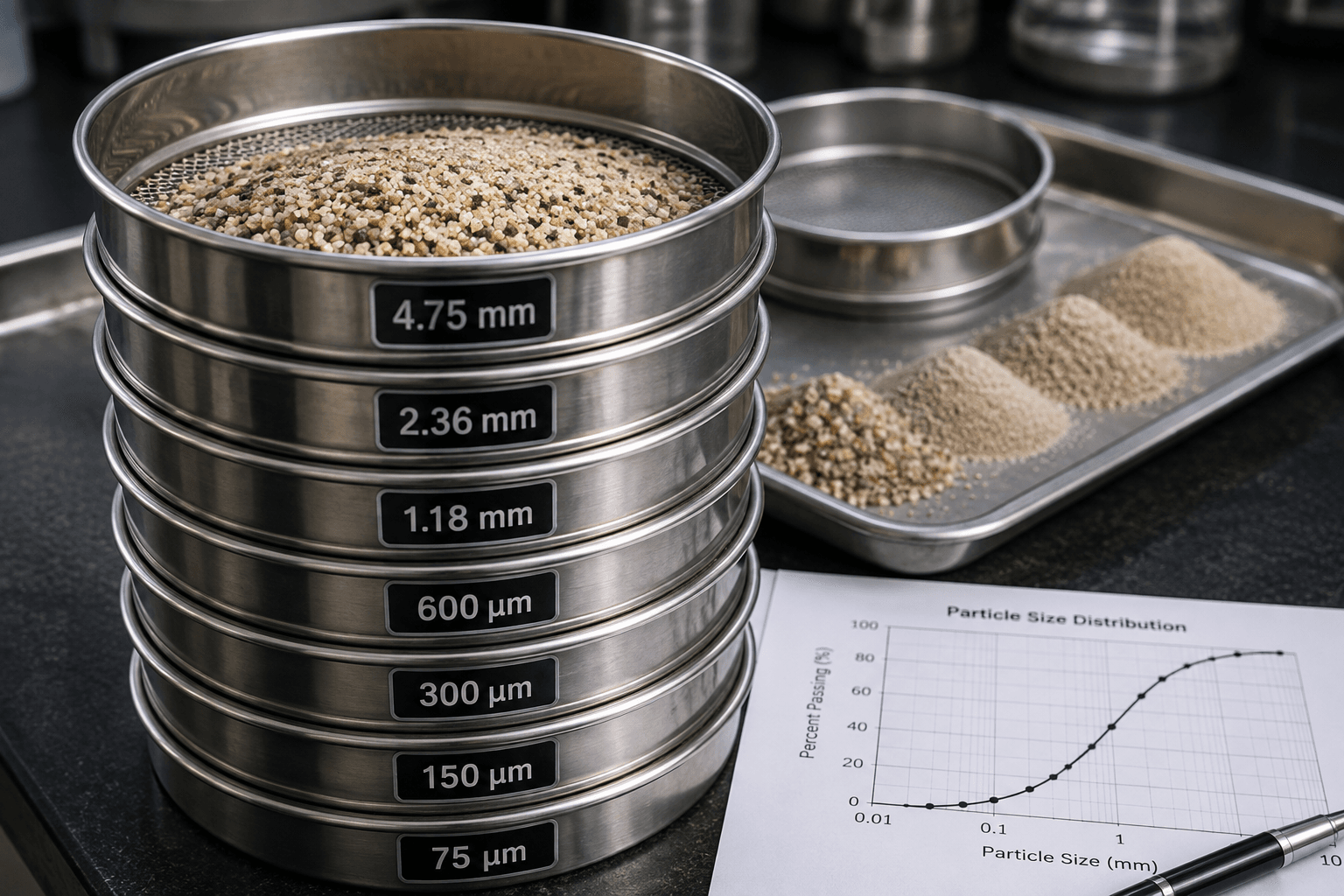
There is no single “glass-grade silica sand” that fits every glass manufacturer. The right grade is the one that matches the buyer’s application, chemistry limits, particle-size requirement and process conditions consistently.
1. What Does “Silica Sand Grade” Actually Mean?
A silica sand grade is a practical specification used to describe the material’s chemical and physical characteristics for a particular application. A buyer should therefore think in terms of a complete specification, not just a product name.
Two suppliers may both offer “glass-grade silica sand” while providing different SiO₂, Fe₂O₃, PSD, moisture and sizing characteristics. The buyer should compare the actual numbers against the plant’s approved raw-material specification.
2. Start With the Glass Application
The first question should be: What type of glass are you producing? Different manufacturing requirements can lead to different raw-material specifications.
Container & Tableware
Buyers may require controlled chemistry, consistent sizing and predictable batch behaviour.
Flat Glass
Raw-material chemistry and iron control can be particularly important where optical properties matter.
Specialty Glass
More specific chemical or physical limits may apply depending on the formulation and process.
Custom Applications
The best approach is to start from the buyer’s existing approved specification and match the supply to it.
3. Compare the Chemical Specification
A buyer should compare the major oxides and impurities against the plant’s approved limit. Typical parameters may include SiO₂, Fe₂O₃, Al₂O₃, CaO, MgO, Na₂O, K₂O, TiO₂ and LOI.
| Parameter | Why It Matters | Buyer Action |
|---|---|---|
| SiO₂ | Primary silica component and an important indicator of mineral purity. | Define the required minimum rather than using a generic “high purity” description. |
| Fe₂O₃ | Important where glass colour and optical properties are sensitive to iron. | Set a measurable maximum for the intended application. |
| Al₂O₃ | Contributes to the overall mineral chemistry and batch formulation. | Compare with the plant’s raw-material specification. |
| Other Oxides | CaO, MgO, Na₂O, K₂O and TiO₂ may matter depending on the process. | Review the complete analysis, not only SiO₂ and Fe₂O₃. |
| LOI | Can indicate volatile components or other material characteristics. | Check against the process requirement where relevant. |
4. Set the Fe₂O₃ Requirement Clearly
“Low iron” is not a complete technical specification. Buyers should define the actual maximum Fe₂O₃ value acceptable for their production process.
A clear requirement might state the maximum Fe₂O₃, minimum SiO₂, particle-size range and permitted tolerance. This gives the supplier something measurable to evaluate and reproduce.
5. Choose the Right Mesh and PSD
Mesh size provides useful information about sieve sizing, but it does not always describe the full distribution of particles. A buyer should therefore request a sieve analysis or PSD when the process depends on a controlled size distribution.
Ask the Supplier For
- Target mesh or sieve range
- Complete particle-size distribution
- Percentage passing and retained at relevant sieve sizes
- Acceptable oversize and fines limits
- Repeatability of the distribution between shipments
6. Ask How the Material Is Processed
Processing can influence the physical consistency of the material. When evaluating a supplier, ask whether the material is washed, dried, screened, sized or otherwise processed before export.
The purpose is not to choose the most heavily processed material. It is to choose the processing route that produces the characteristics required by the buyer.
7. Compare Suppliers on More Than Price
A lower price does not automatically represent a lower total procurement cost if the material causes quality variation, additional processing or production problems.
Supplier Comparison Checklist
- Recent laboratory analysis
- Representative sample
- PSD / sieve analysis
- Ability to meet the required chemistry
- Consistency at commercial scale
- Packaging and loading capability
- Export documentation
- Trial-shipment support
8. Verify the Grade With a Sample
Once the technical requirement is defined, sample evaluation should be the next step. The buyer can test the material in its own laboratory or application before committing to larger commercial quantities.
For new supplier relationships, a trial shipment can provide an additional check because it allows the buyer to evaluate actual commercial material after arrival.
9. What a Real Analysis Should Look Like
For example, UMA INTERNATIONAL TRADELINK has a Silica Sand laboratory analysis dated 14 April 2026. The report records the tested sample’s chemical composition, including SiO₂, Fe₂O₃, Al₂O₃ and other oxides. Use the buyer’s own specification to determine whether the reported sample is suitable for a particular application.
| Reported parameter | Sample result |
|---|---|
| SiO₂ | 99.20% |
| Fe₂O₃ | 0.0210% |
| Al₂O₃ | 0.2900% |
| CaO | 0.0085% |
| MgO | 0.0130% |
| TiO₂ | 0.0620% |
| LOI | 0.190% |
Note: These are reported results for the tested laboratory sample and should not be interpreted as a universal specification for every shipment.
10. Frequently Asked Questions
Can I choose silica sand only by mesh size?
Is the highest SiO₂ grade always the best choice?
Why should Fe₂O₃ have a specified maximum?
Can a supplier customize the silica sand size?
Should I test a sample before a bulk order?
11. Final Takeaway
The right silica sand grade is the one that matches the buyer’s actual glass-making requirement and can be supplied consistently. Start with the application, define the chemical and physical specification, evaluate the sample, then confirm commercial consistency through a trial shipment.

Need Help Selecting the Right Silica Sand Grade?
Share your application, chemistry requirement, PSD or mesh range and destination. Our team can review the requirement and guide you toward a suitable silica sand option.