


Silica Sand for Glass Manufacturing: Properties, Specifications & Selection Guide
A practical guide for glass manufacturers, importers and industrial buyers on evaluating silica sand quality, chemical composition, particle size and supplier capability before purchasing.
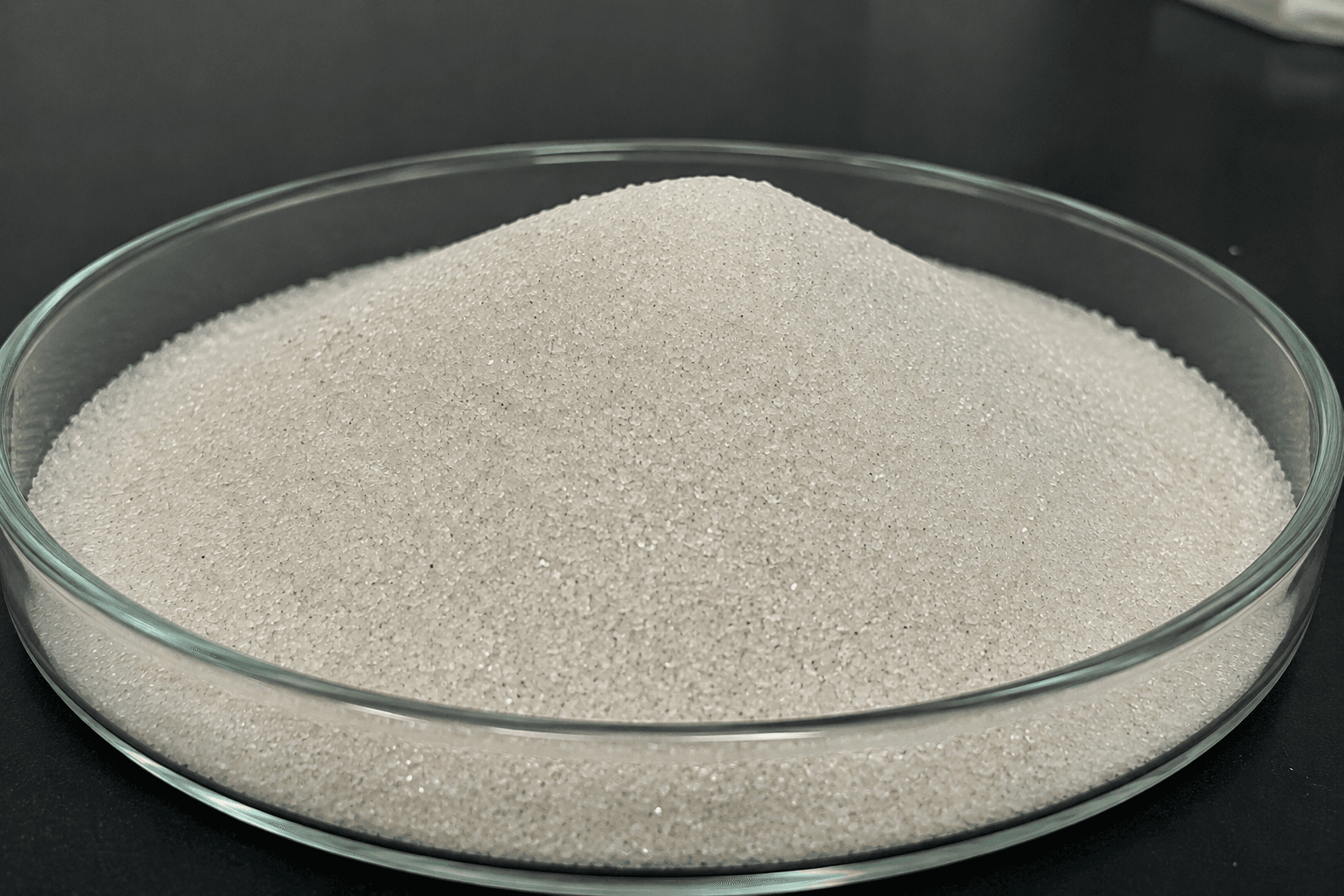
Choosing silica sand for glass is not simply about buying the highest SiO₂ percentage available. The right material must be evaluated according to the glass application, chemical impurities, particle-size distribution, consistency and the supplier's ability to reproduce the specification from shipment to shipment.
1. Why Is Silica Sand Important in Glass Manufacturing?
Silica is one of the fundamental raw materials used in glass production. SiO₂ acts as the principal glass-forming component of the batch. The chemical purity and physical characteristics of the silica feed therefore influence the quality and consistency of the final glass product.
For industrial buyers, this means that silica sand should not be evaluated by a single number alone. A supplier may offer high SiO₂ content, but the suitability of the material also depends on impurities, grain-size distribution and consistency for the buyer's specific melting and production process.
2. Key Properties to Evaluate
Silica Content
Higher SiO₂ purity is generally important for industrial applications, but the required specification depends on the type of glass being produced.
Iron Content
Fe₂O₃ is a critical impurity because iron can affect glass colour. The acceptable level depends on the final glass application.
Alumina & Other Oxides
Al₂O₃ and other oxides should be reviewed as part of the complete chemical analysis rather than considered separately from the application.
Particle Size Distribution
Consistent grain sizing helps buyers evaluate how the material will perform within their specific batch preparation and melting process.
3. Understanding the Chemical Specification
A proper buying decision should begin with a complete chemical analysis. The relative importance of each parameter changes according to the glass product being manufactured. Buyers should therefore provide their required specification rather than assuming one universal "glass grade" fits every application.
| Parameter | Why Buyers Check It | What to Ask the Supplier |
|---|---|---|
| SiO₂ | Main silica component and a primary indicator of mineral purity. | Request the latest chemical analysis and testing method. |
| Fe₂O₃ | Can influence colour and is particularly important for applications requiring clearer glass. | Confirm the maximum permitted iron level for your application. |
| Al₂O₃ | Part of the overall mineral chemistry and should be reviewed against the buyer's process requirement. | Ask for a full oxide analysis, not only SiO₂ and Fe₂O₃. |
| LOI | Can indicate the presence of volatile material or impurities. | Request the test value where relevant to your process. |
| Other Oxides | CaO, MgO, Na₂O, K₂O and TiO₂ may matter depending on the formulation. | Compare the complete analysis with your approved raw-material specification. |
Important: There is no responsible single specification that can be called suitable for every type of glass. Container glass, flat glass, tableware, specialty glass and other applications can have different impurity tolerances and raw-material requirements.
4. Why Is Iron Content So Important?
Iron is one of the impurities that glass manufacturers commonly monitor because it can contribute to coloration. For this reason, buyers should define the acceptable Fe₂O₃ limit according to their final product rather than simply requesting "low iron" material without a measurable target.
A stronger purchasing approach is to specify: maximum Fe₂O₃ level + required SiO₂ level + particle-size requirement + permitted variation.
This makes technical discussions with suppliers more precise and reduces the risk of receiving material that meets a general description but does not meet the actual production requirement.
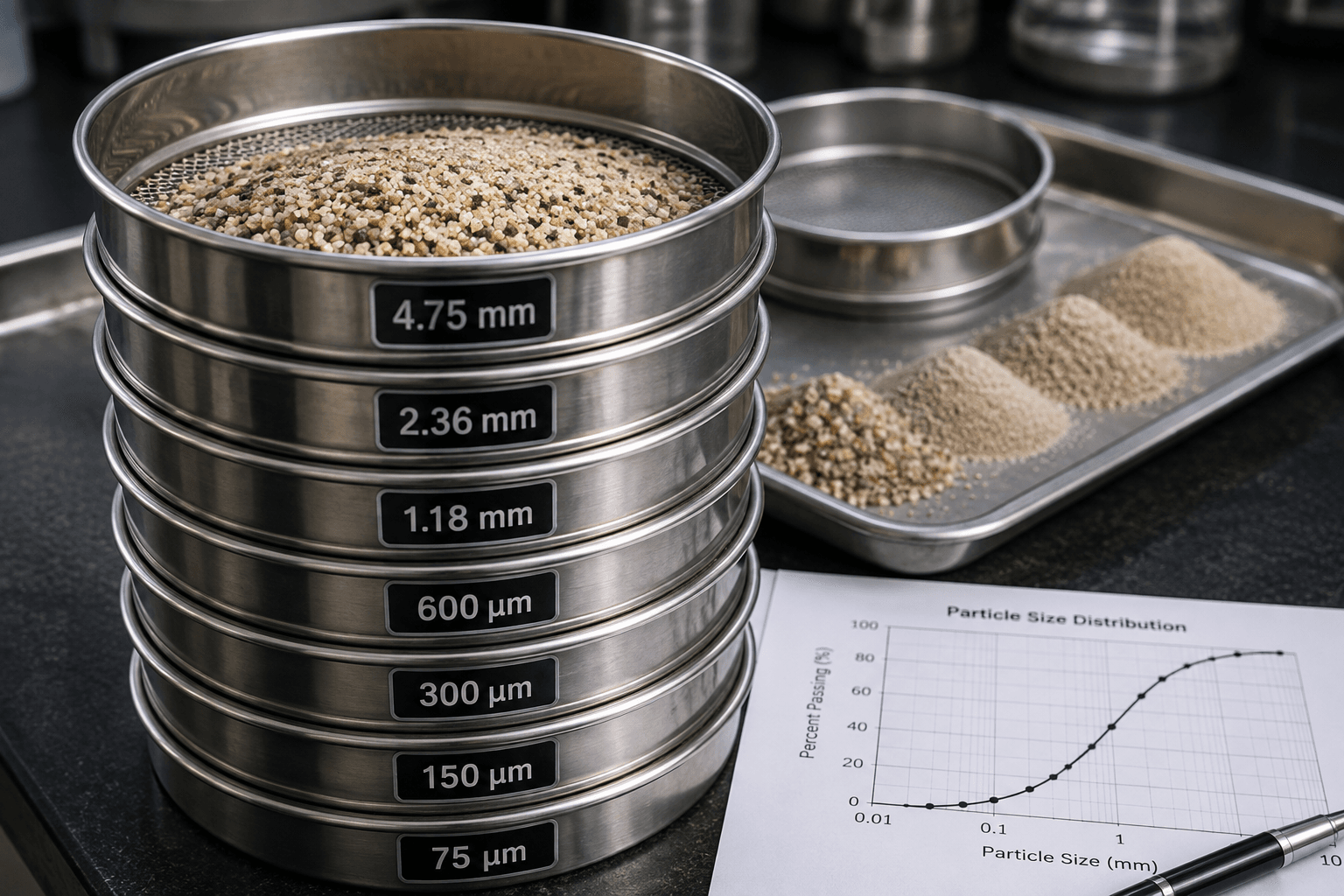
5. Particle Size, Mesh Size and PSD
Particle size is another major purchasing factor. A mesh-size description alone does not always provide enough information about the complete distribution of the material.
For example, two materials may both be described using a similar mesh range while having different percentages of coarse particles, fines and material retained between intermediate sieve sizes.
What Buyers Should Request
- Nominal mesh or sieve range
- Complete sieve analysis or PSD report
- Percentage retained or passing at relevant sieve sizes
- Acceptable tolerance between shipments
- Confirmation of whether the product is washed, dried and screened
The objective is not simply to purchase the narrowest possible size range. The objective is to obtain a particle-size distribution that is appropriate for the buyer's process and remains consistent over time.
6. Physical Contamination Matters Too
Chemical analysis is essential, but it should not be the only quality check. Buyers should also consider visible and physical contamination, including clay, oversized particles, organic matter and other foreign materials that may affect processing.
Before approving a supplier for regular volume, it is sensible to review the actual sample, laboratory analysis and particle-size data together. A representative production sample is more useful than making a decision from a quotation alone.
7. How to Evaluate a Silica Sand Supplier
A technically suitable sample is only one part of supplier evaluation. For regular industrial supply, buyers should also assess whether the supplier can maintain the same quality at commercial scale.
Buyer Evaluation Checklist
- Does the supplier provide a recent chemical analysis?
- Can they provide sieve analysis or PSD data?
- Do they understand the difference between your application and a generic grade?
- Can they produce the required grade consistently?
- Is sample quality representative of commercial production?
- Can they support trial shipments before large-volume commitments?
- Do they have suitable packaging and export capability?
- Are technical documents available when required?
8. Why Samples and Trial Shipments Matter
For industrial minerals, laboratory approval of a small sample is an important first step, but it does not automatically prove long-term commercial consistency.
A structured process is usually more reliable:
- Step 1: Buyer shares the required specification.
- Step 2: Supplier confirms technical feasibility.
- Step 3: Representative sample is tested.
- Step 4: PSD and chemical data are reviewed.
- Step 5: A trial shipment is evaluated under actual commercial conditions.
- Step 6: Long-term supply is discussed after technical approval.
This approach helps both the buyer and supplier reduce technical and commercial risk before moving into regular container or bulk volumes.
9. Questions to Ask Before Buying Glass Grade Silica Sand
What SiO₂ percentage do I need?
What Fe₂O₃ level is acceptable?
Is mesh size enough to approve silica sand?
Should I approve a supplier based only on a laboratory report?
Should I test a sample before placing a large order?
10. Final Takeaway
The right silica sand for glass manufacturing is the material that matches your specific technical requirement consistently—not simply the material advertised with the highest purity number.
Before selecting a supplier, compare the complete chemical analysis, Fe₂O₃ level, particle-size distribution, physical cleanliness, sample performance and the supplier's ability to maintain quality at commercial scale.

Looking for Silica Sand for Your Glass Application?
Share your required chemical specification, particle-size requirement and destination port. Our team can review the requirement and discuss suitable material options before proceeding with samples.