


Sodium vs Calcium Bentonite: Key Differences, Properties & Industrial Applications
A practical guide for buyers comparing Sodium and Calcium Bentonite for drilling, foundry, civil engineering, agriculture and other industrial applications.
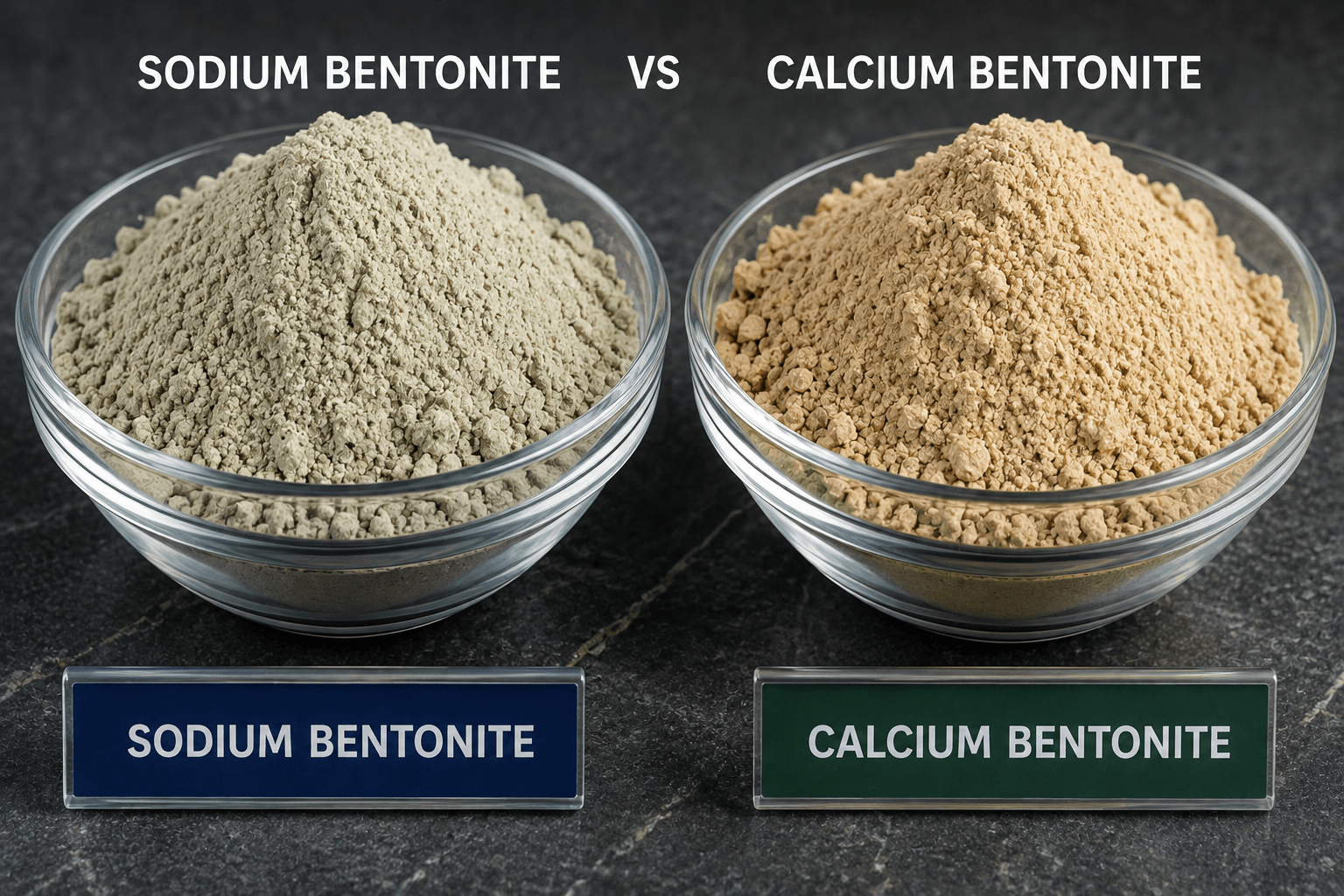
Sodium Bentonite and Calcium Bentonite are both valuable clay minerals, but they are not interchangeable. The right choice depends on the application's swelling, absorption, sealing, viscosity, handling and other performance requirements.
1. What Is the Main Difference?
The practical difference between Sodium and Calcium Bentonite is how they behave when they interact with water and other process conditions. Sodium Bentonite is generally associated with stronger swelling and sealing behaviour, while Calcium Bentonite is commonly valued for absorption and related functional characteristics.
For industrial procurement, the correct question is not simply "Which Bentonite is better?" It is: "Which Bentonite performance profile matches my application?"
2. Sodium Bentonite
Sodium Bentonite is commonly selected where swelling, gel formation and sealing behaviour are important. This makes it relevant to applications where the material needs to interact strongly with water and help form a stable barrier or suspension.
High Swelling Behaviour
Sodium Bentonite is generally preferred where strong swelling and water interaction are important performance requirements.
Sealing & Binding
Its swelling characteristics can make it useful in sealing, binding and slurry-related applications.
Drilling Applications
Sodium Bentonite is commonly evaluated for drilling-fluid applications where rheology, suspension and filtration behaviour matter.
Civil Engineering
It can also be considered for civil and construction applications where sealing and swelling characteristics are important.
3. Calcium Bentonite
Calcium Bentonite is generally associated with stronger absorption characteristics and ion-exchange behaviour. It can therefore be selected for applications where absorbency, carrier properties or purification-related performance are more important than maximum swelling.
Absorption
Calcium Bentonite can be useful where the material's absorbent characteristics are central to the application.
Carrier Applications
Its physical and surface characteristics can support carrier, formulation and agricultural applications.
Purification Uses
Calcium Bentonite may be selected for certain purification and processing applications depending on the required grade.
Specialty Uses
It can be used in selected animal-feed, cosmetic, agricultural and industrial applications where the appropriate grade is available.
4. Sodium vs Calcium Bentonite — Practical Comparison
| Parameter | Sodium Bentonite | Calcium Bentonite |
|---|---|---|
| Primary Characteristic | Strong swelling and sealing behaviour | Strong absorption and ion-exchange characteristics |
| Water Interaction | Generally higher swelling | Generally lower swelling |
| Sealing | Often preferred where swelling-based sealing is required | Selected for applications where absorption is more important |
| Typical Industrial Applications | Drilling, foundry, civil engineering, sealing | Absorbent, carrier, purification and selected specialty applications |
| Buyer Priority | Swelling, gelling, filtration and sealing performance | Absorption, carrier behaviour and application-specific performance |
These are practical distinctions rather than universal specifications. The final grade should always be selected against the buyer's application and technical requirement.
5. How to Match the Bentonite to the Application
Application is the starting point for grade selection. A buyer should define what the Bentonite needs to do before choosing the mineral type.
Start With These Questions
- Is strong swelling required?
- Is sealing or barrier formation important?
- Is suspension or gel performance required?
- Is absorption the primary objective?
- What moisture level is acceptable?
- What mesh or particle-size range is required?
- What quantity is needed per month?
- What packaging is suitable for the application?
6. Sodium Bentonite for Drilling
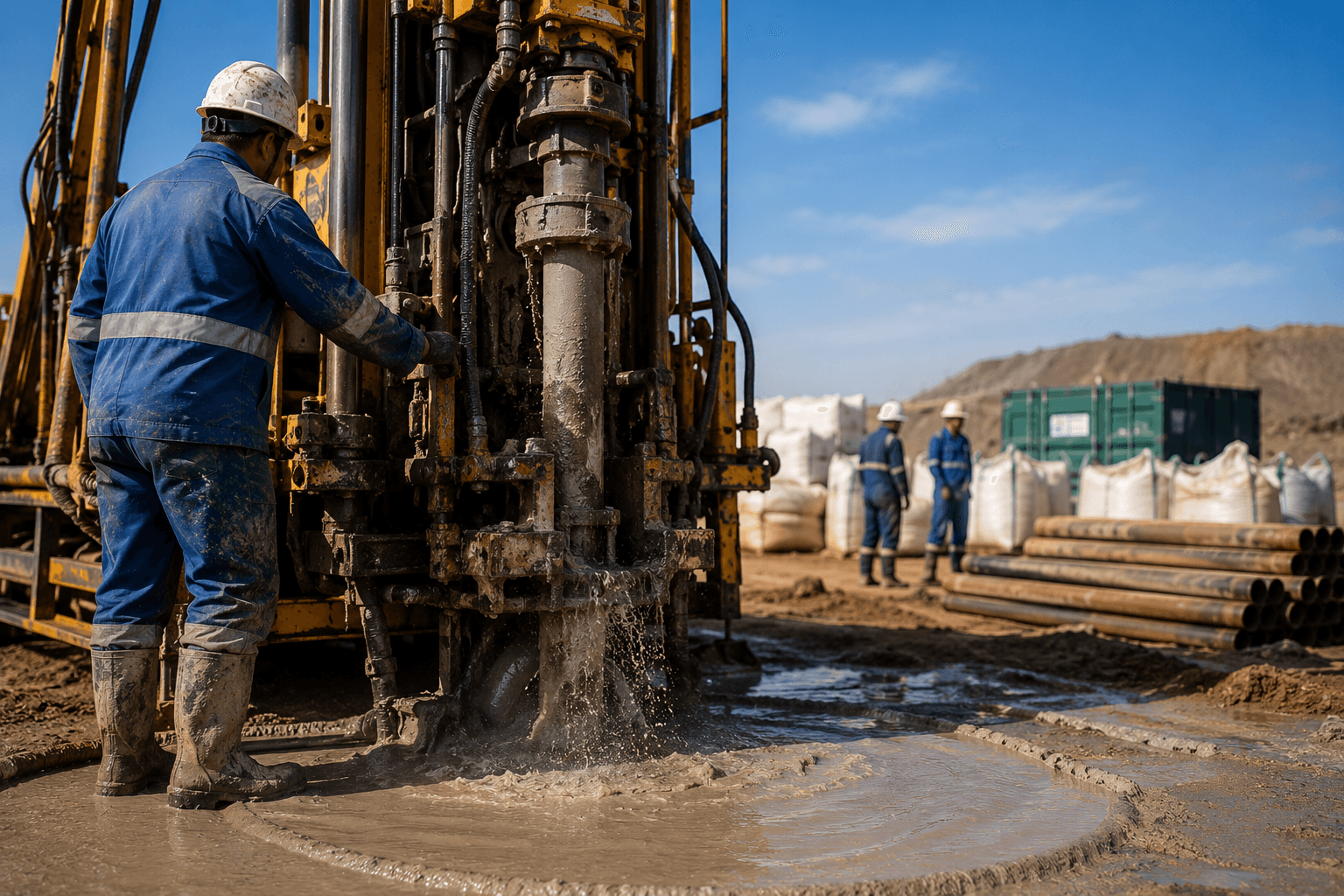
Drilling applications commonly require Bentonite with controlled swelling, viscosity, filtration and suspension behaviour. For this reason, Sodium Bentonite is often the starting point when a drilling customer is evaluating a Bentonite grade.
The buyer should still provide the specific drilling-fluid requirement and applicable technical standard before a grade is approved.
7. Bentonite for Foundry & Civil Engineering
Foundry and civil engineering applications can require different combinations of binding, swelling, sealing and handling properties. A foundry buyer may focus on moulding performance, while a civil engineering project may focus more heavily on slurry stability and sealing.
The correct grade should therefore be selected according to the application rather than using one generic Bentonite specification.
8. What Technical Data Should Buyers Request?
Recommended Buyer Documents
- Technical Data Sheet or product specification
- Montmorillonite content where applicable
- Free swelling value
- pH value
- Moisture content
- Gelling or viscosity-related data where relevant
- Particle-size / mesh information
- Laboratory analysis or COA where available
Your technical specification should be matched with the supplier's documented grade before ordering commercial quantities.
9. Why Sample Testing Matters
A sample should be tested against the buyer's own application requirements wherever the performance is technically sensitive. A supplier's product description is useful, but the buyer's own laboratory or process evaluation provides a stronger basis for approval.
For new supply relationships, a practical sequence is:
- Requirement: Share the intended application and specification.
- Grade selection: Confirm whether Sodium or Calcium Bentonite is appropriate.
- Sample: Test the proposed material.
- Trial shipment: Evaluate actual commercial material.
- Regular supply: Move toward recurring quantities after technical approval.
10. Buyer FAQs
Which is better: Sodium or Calcium Bentonite?
Can Sodium Bentonite be used for drilling?
Can I request a sample before a bulk order?
Can UMA match a buyer's Bentonite specification?
11. Final Takeaway
The correct Bentonite is the one that delivers the required performance for the buyer's application. Sodium Bentonite is generally associated with stronger swelling and sealing behaviour, while Calcium Bentonite is commonly evaluated for absorption and related functional properties.
Before placing a larger order, define the application, agree the technical specification, test a representative sample and confirm the commercial grade before moving into regular supply.
Looking for the Right Bentonite Grade?
Share your application, required grade and technical specification. Our team can review the requirement and help evaluate a suitable Sodium or Calcium Bentonite option.